• When Good Intentions Cost the Game: A Message to Softball Parents

    When Good Intentions Cost the Game: A Message to Softball Parents

    The Play That Got Away

    Fourth inning. We’re up by two runs. Runner on third, one out. It’s the exact scenario we’d drilled all week in practice.

    “Corners in, middle back,” I’d called out dozens of times. “Runner on third—shortstop and second base, your play is to first. Get the sure out.”

    My shortstop had it down. I could see it in her eyes when she set up for the pitch. She was confident, prepared, ready.

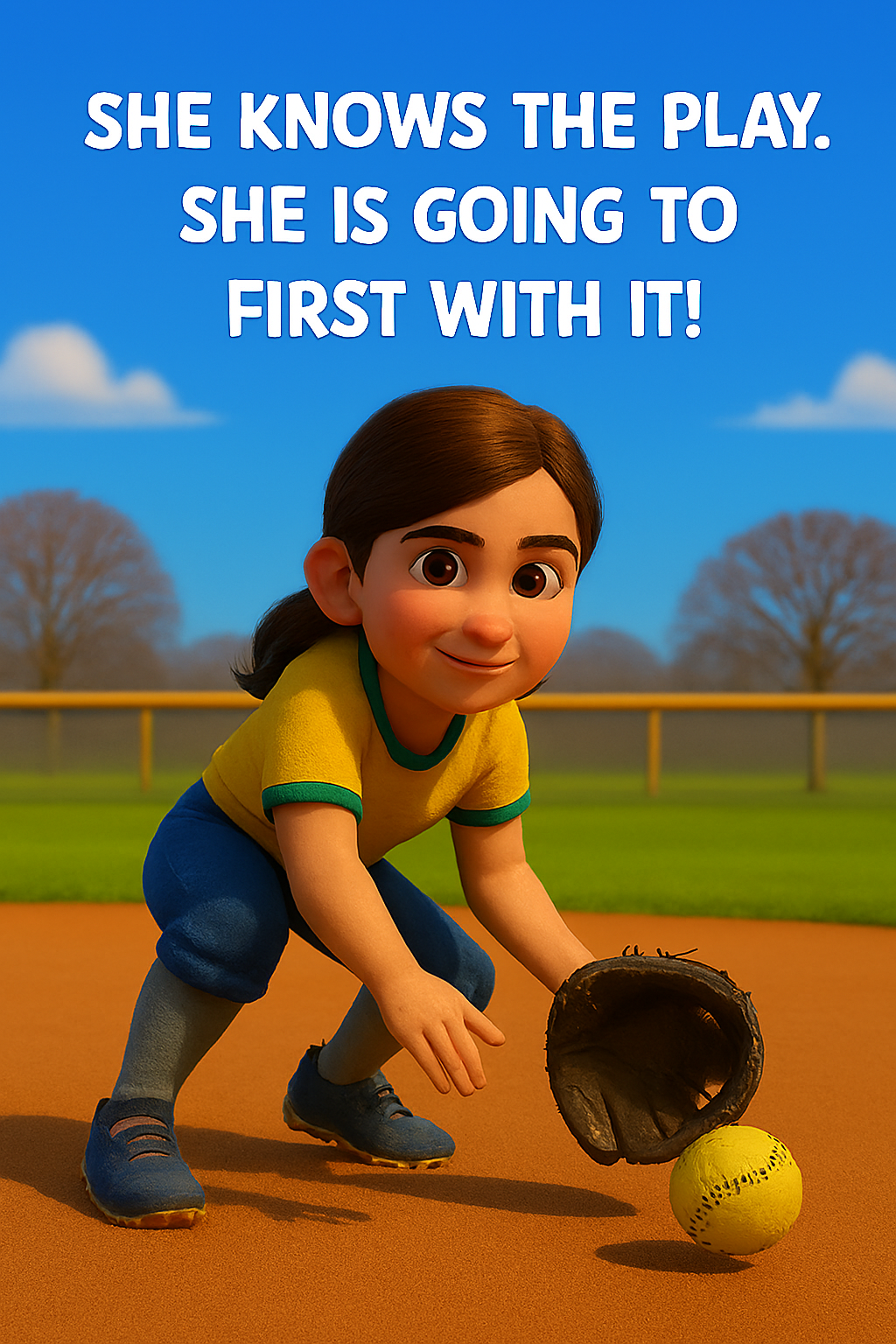
    The ball was hit right to her. Perfect. She fielded it cleanly, came up with the ball, body positioned toward first base—exactly like we’d practiced.

    And then the stands erupted.

    “HOME! HOME! HOME!”

    Fifteen parents, all screaming in unison. On the other side, teammates yelling “FIRST! FIRST!” My shortstop’s head swiveled. Her body was already committed to first, but mid-throw, she tried to redirect to home.

    The ball sailed three feet over the catcher’s head.

    Run scores. Batter advances to second. Two batters later, the game was tied. We’d just given away two runs and lost the out we desperately needed—all on a play we’d practiced perfectly all week.

    The Real Problem Wasn’t the Error

    Let me be clear: I’m not upset with my shortstop. She made a split-second decision under immense pressure—pressure that shouldn’t have existed.

    The play was simple. We’d practiced it. She knew it. The confusion came from outside the lines.

    Parents: We Need to Talk About This

    I know you love your kids. I know you’re invested in every pitch, every play, every out. I know that instinct to help, to guide, to coach from the stands comes from a good place.

    But here’s what you need to understand: When you yell instructions during a play, you’re not helping. You’re creating chaos.

    Here’s what your player is processing in that 2-3 second window:

    • Reading the ball off the bat
    • Positioning their body
    • Fielding cleanly
    • Remembering the game situation
    • Recalling the play we’ve practiced
    • Executing the throw

    Now add:

    • 15 different voices screaming different instructions
    • The anxiety of disappointing you
    • The confusion of conflicting information
    • The fear of making the “wrong” choice

    What Happens When Parents Override the Coach

    When you shout instructions that contradict what we’ve taught, you:

    1. Undermine the coaching – We spend hours teaching these situations. Your split-second call erases that work.
    2. Create decision paralysis – Kids freeze when they hear conflicting information. That hesitation costs games.
    3. Add unnecessary pressure – They’re already nervous. Now they’re trying to please coaches, parents, AND teammates simultaneously.
    4. Reduce their confidence – The message you’re unintentionally sending: “I don’t trust you to know the play.”
    5. Make them second-guess themselves – Even when they DO know the right play, they’ll question it.

    What We Need From You Instead

    Trust the process. We practice these situations because they matter. Your daughter knew what to do.

    Trust your player. She’s more capable than you think. Let her prove it.

    Trust the coach. If I wanted the play at home, I would have called it. I didn’t.

    Save the coaching for the car ride home. Ask questions: “What were you thinking on that play?” “What did coach tell you to do in that situation?” Help them process, don’t override.

    Cheer, don’t coach. “Let’s go, defense!” is perfect. “HOME! THROW HOME!” is coaching. There’s a difference.

    Your Silence is Their Confidence

    I promise you—your player knows you’re watching. They know you care. They want to make you proud.

    The best way you can support them? Let them play the game we’ve taught them.

    When a ball is hit to your daughter, and she’s processing a hundred things at once, the last thing she needs is fifteen voices telling her fifteen different things.

    She needs to hear ONE voice: her coach’s, which has been consistent all week.

    Your silence in that moment isn’t disengagement. It’s trust. It’s confidence. It’s the gift of letting her be the player she’s worked to become.

    The Lesson We All Learned

    We didn’t win that game. But the conversation we had afterward was more valuable than any victory.

    We talked about external noise. About trusting our preparation. About the difference between support and interference.

    And I had a hard conversation with parents, too. Because if we’re going to grow as a team, everyone—coaches, players, AND parents—needs to understand their role.

    Moving Forward

    Next time your daughter’s team is in a big moment, I’m asking you to do something that might feel unnatural:

    Take a deep breath. Trust her. Trust me. And let her play.

    Cheer when she makes the play. Encourage when she doesn’t. But during those 2-3 seconds when the ball is in motion?

    Let your silence be her strength.

    Because the plays we practice all week deserve the chance to be executed. And your player deserves the chance to show you what she’s learned.


    Coach’s Note: This isn’t about silencing parents or removing passion from the stands. It’s about understanding the difference between support and interference. Our kids are listening—let’s make sure they’re hearing the right voices at the right times.


    What do you think? Parents and coaches—have you experienced this? How do you handle the balance between enthusiastic support and letting players execute? Drop a comment below.

  • The Play That Changed Two Lives

    The Play That Changed Two Lives

    The Car Ride Home: How One Conversation Changed Everything

    The Play That Changed Two Lives

    Bottom of the 9th inning. Championship game. The score is tied 3-3, and the opposing team has runners on first and second with two outs. Twelve-year-old Marcus stands in right field, his heart pounding so loud he can hear it over the crowd noise. The batter connects—a sharp line drive heading deep into right field.

    Marcus doesn’t hesitate. His legs are already moving, eating up the ground between him and the ball. He can hear his teammates shouting. He can feel the grass beneath his cleats. The ball is dropping fast. He dives—arms fully extended, glove outstretched, body parallel to the ground.

    The ball clips the edge of his glove and bounces past him, rolling to the fence. By the time he scrambles to his feet and throws it in, two runs have scored. Game over. Season over.

    Marcus walks slowly to the dugout, fighting back tears. His teammates pat him on the back, but he barely feels it. His coach says something about a great season, about how proud he is, but the words don’t land. All Marcus can think about is that dive, that ball, that moment when everything fell apart.

    He finds his dad in the parking lot. They load his gear into the trunk in silence. Marcus climbs into the passenger seat, still wearing his dirty uniform. His dad starts the engine, and they pull out of the parking lot.

    This is where the story splits in two.


    The First Car Ride Home

    For the first five minutes, neither of them speaks. Marcus stares out the window, replaying the dive over and over in his mind. Each replay makes it worse. Each time, he sees himself getting there just a little bit sooner. Each time, he makes the catch.

    His dad finally breaks the silence.

    “You should have had that one, Marcus.”

    Marcus’s stomach drops.

    “You were close, but close doesn’t win championships. If you’d just gotten there a half-second faster…”

    Marcus slumps lower in his seat.

    “You know what? If you’d worked harder in the off-season, you would have been faster. You would have made that catch. Your team would be celebrating right now instead of going home.”

    The words land like punches. Marcus feels his throat tighten.

    “I just think you need to understand that if you want to be good at this game, you have to put in the work. The other kids are training year-round now. You can’t just show up and expect to make plays like that. You needed to be better, and you weren’t.”

    Marcus nods silently, blinking back tears. Inside, something is breaking. Every word confirms what he already feels: I failed. I let everyone down. I’m not good enough.

    When they get home, Marcus goes straight to his room. He peels off his uniform and stuffs it in the back of his closet. He doesn’t want to look at it.

    One Week Later

    “Hey Marcus, want to hit the batting cages?” his dad calls from downstairs.

    Marcus is on the couch, controller in hand, deep into a video game. “Nah, I’m good.”

    “Come on, it’ll be fun. We haven’t practiced in a while.”

    “I said I’m good, Dad.”

    His dad sighs and walks away. Marcus keeps playing, but he’s not really paying attention to the game. He’s thinking about baseball, about that dive, about how he doesn’t want to feel that way again. What’s the point of practicing if he’s just going to fail when it matters?

    Over the next few weeks, his dad asks again. And again. Each time, Marcus has an excuse. He’s tired. He has homework. He’s hanging out with friends.

    But the truth is simpler: he’s afraid. Afraid to try and come up short again. Afraid to be reminded that he’s not good enough.

    Three Months Later

    Spring sign-ups for baseball arrive in Marcus’s email. His dad forwards it to him with a question mark.

    Marcus doesn’t respond.

    A few days later, his dad asks directly: “So, are you playing this year?”

    Marcus shrugs. “I don’t think so. I’m just not really into it anymore.”

    His dad looks disappointed but doesn’t push it. “Okay. If that’s what you want.”

    But it’s not what Marcus wants. Not really. He misses the feeling of grass under his cleats, the crack of the bat, the way his team used to joke around in the dugout. He misses baseball.

    He just doesn’t miss feeling like a failure.

    So he quits.


    The Second Car Ride Home

    For the first five minutes, neither of them speaks. Marcus stares out the window, replaying the dive over and over in his mind. Each replay makes it worse. Each time, he sees himself getting there just a little bit sooner. Each time, he makes the catch.

    His dad finally breaks the silence.

    “That was an incredible dive, Marcus.”

    Marcus glances over, surprised.

    “I’m serious. Do you know how fast you had to run to even get to that ball? I’m not sure anyone else on the team reaches it. That was incredible hustle.”

    Marcus feels something loosen in his chest, just a little.

    “I know you’re disappointed. I am too. But buddy, you played your heart out all season. That was one play in one game. It doesn’t define you.”

    His dad pauses at a red light and looks over at him. “You know what I saw today? I saw a kid who never gave up on a single play. I saw a teammate who cheered for everyone else even when you were struggling. I saw someone who dove full-extension for a ball in the championship game. Most kids would have given up on that ball. Not you.”

    Marcus nods, his eyes stinging, but for a different reason now.

    “You guys made it to the championship. Do you know how special that is? Most teams don’t make it this far. You should be so proud of what you accomplished this season. I am so proud of you.”

    When they get home, Marcus goes to his room. He takes off his uniform slowly, looking at the dirt stains on his pants from the dive. He hangs it on his door, where he can see it.

    One Week Later

    Marcus finds his dad in the garage. “Hey Dad, do you want to go play catch?”

    His dad looks up from what he’s doing, a smile spreading across his face. “Absolutely. Give me two minutes.”

    They head to the backyard. As they warm up, Marcus says, “Can we work on my jumps? I want to get better at reading the ball off the bat. I think if I’d gotten a better jump, I might have made that catch.”

    His dad nods. “Great idea. Let’s work on your reaction time and your first step.”

    They spend the next hour practicing. Marcus messes up plenty—he misjudges fly balls, stumbles on his breaks, overthrows his dad twice. But instead of frustration, he feels energized. He’s learning. He’s getting better.

    “Can we do this again tomorrow?” Marcus asks as they head inside.

    “Absolutely,” his dad says. “I’m proud of you for wanting to improve.”

    Three Months Later

    Marcus is at the kitchen table with his dad’s laptop open in front of him. He’s researching summer baseball camps in the area, comparing schedules and costs.

    “Dad, can we talk about this camp in July? It’s supposed to be really good for outfielders.”

    His dad walks over and looks at the screen. “That looks great. Let’s make it happen.”

    Spring sign-ups arrive in Marcus’s email. He registers the same day.

    At tryouts, the coach asks him what position he plays. “Right field,” Marcus says with confidence. “And I’ve been working on my jumps all winter.”

    He made the team. And this time, when the season starts, he’s not playing scared. He’s playing with joy.


    Why This Matters: The Psychology of Parental Response

    These aren’t just two different stories—they’re two different futures, and they both started with the same missed catch. The only variable was the car ride home.

    The Difference Isn’t About Standards

    Here’s what’s crucial to understand: both dads wanted excellence for their sons. Both believed Marcus could have made that catch. Both cared deeply about his success in baseball.

    The difference wasn’t about having high standards or low standards. It wasn’t about one dad being “soft” and the other being “tough.”

    The difference was about where they focused: the gap or the growth.

    The first dad focused on the gap between where Marcus was and where he “should” have been. Every word emphasized what was missing, what Marcus lacked, what he failed to do.

    The second dad focused on the growth—what Marcus had accomplished, the effort he’d given, the character he’d shown. He acknowledged the disappointment without making it an indictment of Marcus’s worth or work ethic.

    Both approaches came from love. But only one built resilience.

    Shame Closes, Encouragement Opens

    Research in sports psychology consistently shows that shame-based motivation backfires, especially with young athletes. When children internalize failure as a reflection of their character or their worth, they develop what psychologists call a “fixed mindset”—the belief that their abilities are static and can’t be changed.

    In Marcus’s first story, his dad’s words taught him: You’re not fast enough. You didn’t work hard enough. You’re not good enough. These aren’t just criticisms of a play—they’re criticisms of who Marcus is.

    And here’s the devastating part: Marcus believed it. He internalized it. And once he believed he wasn’t good enough, practicing felt pointless. Why work on something you’re fundamentally not capable of doing well?

    In the second story, the same disappointment existed, but the message was different: You’re capable. You’re hardworking. You came up short on one play, but that doesn’t define you. This creates what psychologists call a “growth mindset”—the belief that abilities can be developed through effort and practice.

    When Marcus believed he was capable, practicing felt empowering. It felt like progress.

    The “Should Have” Trap

    Notice the language in the first car ride: “You should have made that catch.” “You should have worked harder.” “You should have been faster.”

    “Should have” is one of the most damaging phrases in sports parenting. It’s conditional love disguised as coaching. It says: “You would be worthy of celebration if you had done X, but since you didn’t, you’re not.”

    Children hear “should have” as: “You weren’t enough.”

    The second dad avoided this trap. Instead of “should have,” he used phrases like “I’m proud of” and “You showed such great.” These communicate unconditional positive regard—the sense that his love and pride aren’t contingent on making a catch.

    This doesn’t mean lowering standards. The second dad still encouraged improvement. But he separated Marcus’s worth from his performance.

    The Long-Term Impact: Keeping Kids in the Game

    Here are the statistics that should alarm every sports parent: 70% of kids quit organized sports by age 13. The number one reason cited? “It’s not fun anymore.”

    And when researchers dig deeper, they find that parental pressure is a leading cause of that lost enjoyment.

    Kids don’t quit because they lose games. Kids quit because they feel like they’re losing themselves.

    They quit because the sport that once brought them joy now brings them anxiety. They quit because they’d rather avoid failure than risk disappointing their parents again. They quit because the car ride home after a bad game feels worse than the bad game itself.

    In the first story, Marcus quit baseball not because he didn’t love it, but because he couldn’t bear the weight of not being good enough. He’s part of that 70%.

    In the second story, Marcus stayed in the game. He worked harder. He fell more in love with the sport. He’s part of the 30% who stick with it—not because they’re more talented, but because someone helped them see that failure is part of the process, not the end of the story.


    The Words That Build vs. The Words That Break

    So what does this look like practically? How do you respond after a tough loss, a bad performance, or a critical mistake?

    Here’s a guide:

    After a Loss or Mistake:

    Instead of: “You should have made that play.”
    Try: “That was a tough play—you gave it everything you had.”

    Instead of: “If you’d worked harder, you would have done better.”
    Try: “I’m proud of how hard you worked all season to improve.”

    Instead of: “Now your team lost because of you.”
    Try: “Your team got this far because of players like you. You all worked so hard together.”

    Instead of: “You weren’t focused enough.”
    Try: “I know you care so much about this. That’s why it hurts right now.”

    When Addressing Areas for Improvement:

    Instead of: “You need to be faster/stronger/better.”
    Try: “I noticed you’ve been working on your speed. Want to come up with a plan to keep improving?”

    Instead of: “The other kids are better than you because they train more.”
    Try: “I’ve seen you grow so much this year. What do you want to work on next?”

    Instead of: “You’re not going to make varsity if you don’t step it up.”
    Try: “What are your goals for next season? How can I support you in reaching them?”

    When They’re Being Hard on Themselves:

    Instead of: “Yeah, you really messed up.”
    Try: “You’re being really hard on yourself. Every great player has had moments like this.”

    Instead of: “Well, you just need to practice more so it doesn’t happen again.”
    Try: “Mistakes are how we learn. What do you think you might do differently next time?”

    Instead of: Silence (which kids interpret as agreement with their negative self-talk)
    Try: “I can see you’re disappointed, and that’s okay. But I don’t want you to lose sight of all the great things you did today.”


    The Choice Every Parent Makes

    The car ride home happens after every game, every practice, every tryout. It’s not a one-time conversation—it’s a pattern of hundreds of small moments that shape how your child sees themselves.

    And here’s what makes it so powerful: your child will forget most of the games. They’ll forget the scores, the standings, who won the championship three years ago.

    But they’ll never forget how you made them feel about themselves when they failed.

    They’ll remember if you made them feel small or if you made them feel seen.

    They’ll remember if you focused on what they lacked or what they gave.

    They’ll remember if you made sports feel like a test they kept failing or an adventure they were on together.

    Marcus’s story isn’t hypothetical. I’ve watched it play out hundreds of times as a coach. Same missed catch. Same tough loss. But the parents who focused on effort over outcome, growth over results, and character over performance? Their kids stayed in the game. Their kids loved the sport. Their kids built resilience that carried them far beyond the baseball field.

    The parents who focused on what went wrong, who made love feel conditional, who equated performance with worth? I watched their kids quit. Not all at once—sometimes it took years. But eventually, the joy leaked out, and the kids walked away.

    Your words matter. The car ride home matters.

    Choose the one that keeps your kid in the game.

    Choose the one that builds resilience instead of shame.

    Choose the one that reminds them: you are proud of them not because of what they do, but because of who they are.

    Because at the end of the day, the championship that matters most isn’t the one they play for on the field. It’s the one they carry inside themselves for the rest of their lives—the belief that they are worthy, capable, and loved, regardless of the outcome.

    That’s the game every parent should be coaching toward.


    Your Turn: Reflection Questions for Parents

    • Think about the last time your child had a disappointing performance. What did you say in the car ride home? If you could rewind, would you change anything?
    • Do your post-game conversations focus more on what went wrong or what they learned and how they grew?
    • Does your child still ask to practice with you, or have they started avoiding it? If they’re avoiding it, why might that be?
    • How do you respond when your child makes a mistake? Do they feel safe failing around you?
    • Are you parenting the athlete or the person? When the sports career ends (and it will for 99% of kids), what will remain?

    The car ride home is your opportunity to be the parent your child needs—not the coach they already have, but the safe place they can return to no matter what happened on the field.

    Choose your words carefully. They’re building more than an athlete.

    They’re building a human being.

  • Why the ‘Worst’ Team Might Be the Best Team for Your Kid

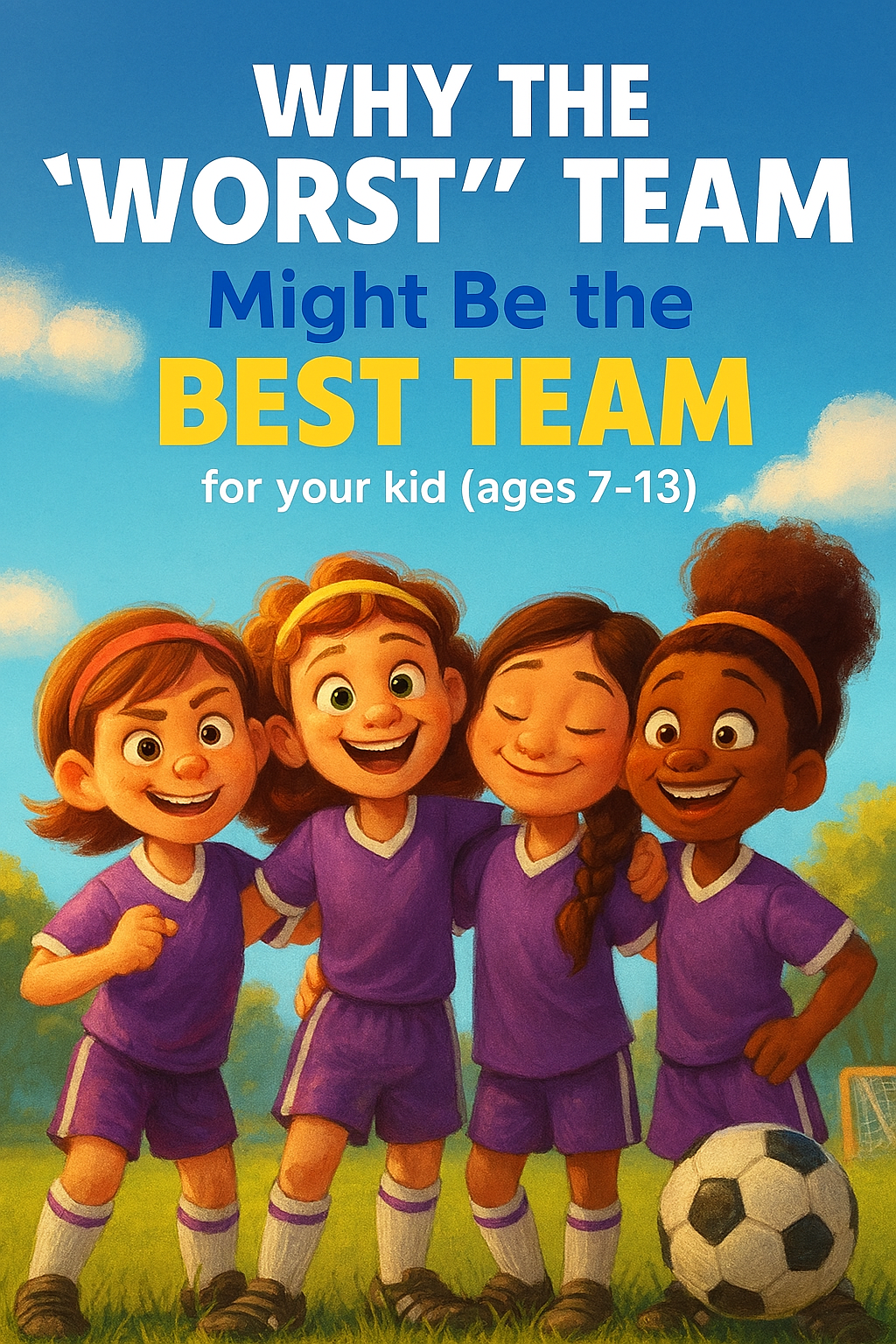
    Why the ‘Worst’ Team Might Be the Best Team for Your Kid

    Why the ‘Worst’ Team Might Be the Best Team for Your Kid

    I know what you’re thinking. Your kid just made the B team. Or the rec league team that went 2-10 last season. Or they got cut from the elite travel squad and now you’re scrambling to find “the next best option.”

    And you’re panicking.

    I get it. We all want our kids to be challenged. To play with the best. To have access to top coaching. The elite team has the winning record, the fancy uniforms, the college showcase tournaments.

    But here’s what nobody tells you: the “worst” team might actually be exactly what your 7-13 year old needs right now.

    Playing Time Trumps Everything at This Age

    Let’s talk about what actually develops young athletes. It’s not watching from the bench. It’s not getting 5 minutes of garbage time while the starters rest.

    It’s touching the ball. Making decisions. Making mistakes. Trying again.

    On that B team or rec squad, your kid might play the entire game. They’re taking shots, making passes, learning positions. They’re getting hundreds of touches per game instead of dozens. They’re playing in crunch time, not watching it.

    A study on youth development shows that playing time is the single biggest predictor of skill improvement in athletes under 14. Not coaching quality. Not competition level. Minutes played.

    Your kid learning to dribble with their weak hand in a real game situation beats watching an elite player do it from the sideline every single time.

    The Pressure Cooker vs. The Laboratory

    Elite teams at the youth level often become pressure cookers. Win at all costs. Don’t make mistakes. Play it safe. The coach is yelling, parents are filming every play, and that college scout myth looms large even though your kid is in 5th grade.

    The lower-level team? It’s a laboratory. Try that behind-the-back pass. Attempt the shot from distance. Play a new position. Figure out what works through trial and error.

    This is where creativity develops. Where kids learn to love the game instead of fear failure. Where they build confidence by working through problems rather than being benched for them.

    Some of the best professional athletes talk about their “playground days” where they experimented freely. The rec team is today’s version of that playground.

    Your Kid Might Actually Be a Leader

    On the elite team, your 10-year-old might be the 8th best player. Good, but not special. They’re following, not leading.

    On that “worse” team? They might be one of the better players. And that’s not a bad thing.

    They learn to lead. To encourage teammates. To set an example with effort and attitude. They develop communication skills. They understand what it means to lift others up.

    These are life skills that matter way more than whether they won a 4th grade tournament.

    Leadership opportunities are rare on stacked teams. Everyone’s talented, everyone’s competitive. But put your kid in a position where their voice matters, where their effort sets the tone? That’s character development you can’t buy.

    The Mental Game Matters More Than You Think

    Here’s an uncomfortable truth: elite youth teams can destroy confidence faster than they build it.

    Your kid goes from being the star of their elementary school team to barely getting off the bench. They compare themselves to the 12-year-old who’s already 5’8″ and hitting puberty. They start believing they’re not good enough.

    Meanwhile, the kid on the recreational team is building self-efficacy. They’re experiencing success. They’re seeing their hard work pay off with actual results they can feel. They’re developing a growth mindset because they can actually see themselves growing.

    Sports psychology research consistently shows that kids who experience regular success and improvement stay in sports longer and develop better mental resilience than those who are constantly on the bottom of a pecking order.

    The Real Questions to Ask

    Instead of “Is this the most competitive team available?” try asking:

    • Will my kid actually play meaningful minutes?
    • Will they get to try different positions and roles?
    • Is the environment focused on development or just winning?
    • Are they having fun and excited to go to practice?
    • Are they learning to love the sport or learning to fear mistakes?

    If the answers favor the “worse” team, you’ve got your answer.

    When the Elite Team Makes Sense

    Look, I’m not saying elite teams are always wrong. If your kid is genuinely elite level, thrives on competition, and gets meaningful playing time on the top team, great.

    But we’re talking about 7-13 year olds here. The developmental window is long. Skills can be learned. Physical development is unpredictable. The late bloomer on the rec team at 11 might be the star at 16.

    Don’t mortgage your kid’s development, confidence, and love of the game for a trophy and bragging rights at the office.

    The Bottom Line

    The best team for your kid isn’t the one with the best record. It’s the one where they play, grow, learn, and want to come back tomorrow.

    Sometimes that team goes 2-10. And that’s perfectly okay.

    Your job isn’t to get them on the most elite team possible at age 9. Your job is to help them develop skills, character, resilience, and a genuine love for sports that lasts.

    The “worst” team might just be the best place to do exactly that.


    What’s your experience been? Have you ever chosen the lower-level team for your athlete? Drop a comment and let me know how it turned out.

  • Why the Best Baseball Players Play Other Sports (And Your Kid Should Too)

    Why the Best Baseball Players Play Other Sports (And Your Kid Should Too)

    Why the Best Baseball Players Play Other Sports (And Your Kid Should Too)

    It’s October, and I know what many baseball parents are thinking right now: “Should my kid do fall ball? Winter training? What about that elite baseball academy that just opened up?”

    I get it. Your kid had a great season. Or maybe they struggled and you’re worried they’ll fall behind. Either way, the voice in your head is saying: more baseball equals better baseball player.

    But here’s what that voice isn’t telling you: The best thing your baseball player can do this off-season might be playing basketball. Or soccer. Or hockey. Or anything that isn’t baseball.

    Let me explain why.

    The Pressure to Specialize Is Real (And Wrong)

    If you’re feeling pressure to keep your 8, 9, 10, or 11-year-old in baseball year-round, you’re not alone. The youth sports industry has convinced parents that early specialization is the path to success. That if your kid isn’t playing their sport 12 months a year, they’ll get left behind.

    The travel ball organizations send emails about winter training. Other parents post about their kids’ fall ball tournaments. Your kid’s teammate just committed to an elite program that practices four days a week.

    The fear is real: What if my kid falls behind?

    But here’s what the research actually shows: early specialization doesn’t create better athletes. It creates injured, burned-out kids who quit sports entirely.

    What the Pros Actually Did

    Want to know what most Major League Baseball players did when they were your kid’s age? They played other sports.

    Approximately 60% of MLB players also played football or basketball in high school. That’s not just a fun fact—it’s a pattern. The athletes who make it to the highest levels are usually the ones who developed a broad base of athleticism first, then specialized later.

    Think about what different sports teach:

    • Basketball: Court awareness, quick decision-making, lateral movement, hand-eye coordination
    • Soccer: Endurance, footwork, spatial awareness, team communication
    • Football: Explosive power, catching skills (for receivers), strategic thinking
    • Hockey: Balance, quick reactions, edge work that translates to base running

    Every one of these skills makes your kid a better baseball player. But more importantly, they make your kid a better athlete.

    The Injury Risk You’re Not Thinking About

    Here’s something most parents don’t realize: There is an independent risk of injury and serious overuse injury in young athletes who specialize in a single sport.

    When kids play the same sport year-round, they use the same muscles, in the same ways, over and over. For baseball players, this often means:

    • Elbow and shoulder overuse from pitching
    • Repetitive stress on throwing arms
    • Limited development of supporting muscle groups
    • Growth plate injuries that can have long-term consequences

    Playing other sports gives those overused muscles a break while building complementary strength and movement patterns. Research consistently shows that delayed sports specialization or youth multisport participation was associated with reduced injury risk.

    Your kid’s arm needs a break. Their body is literally still growing. Let it grow in different directions.

    The Mental Game Matters More Than You Think

    Here’s what happens to a lot of specialized kids around ages 10-12: they stop loving their sport.

    Why? Because it stopped being fun and started being work. Because every practice, every game, every mistake carries weight when it’s the only thing they do.

    Playing multiple sports keeps things fresh. It gives kids:

    • Mental breaks from the pressure of their primary sport
    • New challenges that reignite their competitive spark
    • Different coaches with different teaching styles and personalities
    • Varied social circles so their entire identity isn’t wrapped up in being “the baseball kid”
    • Perspective that reduces the stakes of any single game or season

    I’ve seen it countless times: a kid is dragging through baseball season, then lights up on the basketball court or soccer field. That joy, that energy, that love of competing—it all comes back to baseball when the season starts again.

    What This Actually Looks Like for Your Kid

    So what should your 8-11 year old baseball player be doing right now, in October?

    Ages 8-9:

    • Play 2-3 different sports per year
    • Emphasize fun and skill variety
    • No sport should dominate their schedule
    • Keep things recreational—this is not the year for elite teams in anything

    Ages 10-11:

    • Still playing at least 2 sports (ideally 3)
    • Can start being more serious about one sport, but still playing others
    • Baseball should be 6-8 months max, not year-round
    • Off-season should include a completely different sport

    The off-season game plan:

    • Pick one other organized sport (basketball, soccer, hockey, wrestling, etc.)
    • Add unstructured play time—backyard games, pickup sports, just being a kid
    • Light baseball skill maintenance is fine (hitting off a tee, playing catch occasionally)
    • No intensive baseball training programs or showcases

    Notice what’s NOT on this list? Fall ball tournaments. Winter baseball academies. Year-round hitting lessons.

    But What About Getting Recruited?

    I know what you’re thinking: “This sounds great in theory, but college coaches want to see commitment. Don’t kids need to specialize to get recruited?”

    Short answer: Not at ages 8-11. Not even close.

    College coaches aren’t looking at 10-year-olds. They’re not even really looking at 13-year-olds. They’re looking at 16 and 17-year-olds who can play.

    And you know what makes a good 17-year-old player? A kid who:

    • Isn’t injured from overuse
    • Still loves playing
    • Has a broad athletic foundation
    • Can move well in multiple planes of motion
    • Hasn’t burned out from doing the same thing for ten years

    Playing multiple sports now doesn’t hurt your kid’s future. It protects it.

    The Permission You Need

    Here’s what I want you to hear: It’s okay to let your kid play other sports.

    In fact, it’s more than okay. It’s better for their athletic development. It’s better for their physical health. It’s better for their mental wellbeing. And yes, it’s even better for their long-term baseball success.

    You’re not falling behind by playing basketball this winter. You’re not hurting your kid’s chances by skipping fall ball. You’re not being a bad baseball parent by letting them try soccer.

    You’re being a smart parent who understands that childhood athletics should build athletes, not break them.

    What to Do Next

    If you’re convinced but don’t know where to start, here’s your action plan:

    1. Have a conversation with your kid. Ask them what other sport they’d like to try this fall or winter. Follow their interests.
    2. Look for recreational or community leagues. Your kid doesn’t need to be on an elite team in every sport. The point is variety and fun.
    3. Set boundaries with baseball. If your kid is doing one off-season baseball activity, that’s plenty. One winter hitting session per week? Fine. But it shouldn’t dominate their schedule.
    4. Ignore the noise. Other parents will make different choices. That’s okay. You’re making the right choice for your kid.
    5. Keep it fun. Whatever sports your kid does, the goal is the same: develop athleticism, build confidence, and keep the joy of playing alive.

    The Long Game

    Youth sports aren’t about maximizing your kid’s ability at age 10. They’re about developing an athlete who can still play—and still wants to play—at 15, 17, or beyond.

    The kids who specialize early often peak early. They hit their ceiling, get hurt, or burn out before they ever reach high school.

    The kids who play multiple sports? They’re building a foundation. They’re staying healthy. They’re learning to love competition in all its forms. And when it’s time to focus on one sport in high school, they’ve got the athletic tools and mental toughness to excel.

    So this winter, when other parents are posting about their kid’s baseball academy schedule, and you’re watching your kid play basketball or hockey or whatever they chose?

    You can smile, knowing you’re playing the long game. And in youth sports, the long game always wins.

    What sports is your baseball player trying this off-season? I’d love to hear about it—drop a comment or send me a message!

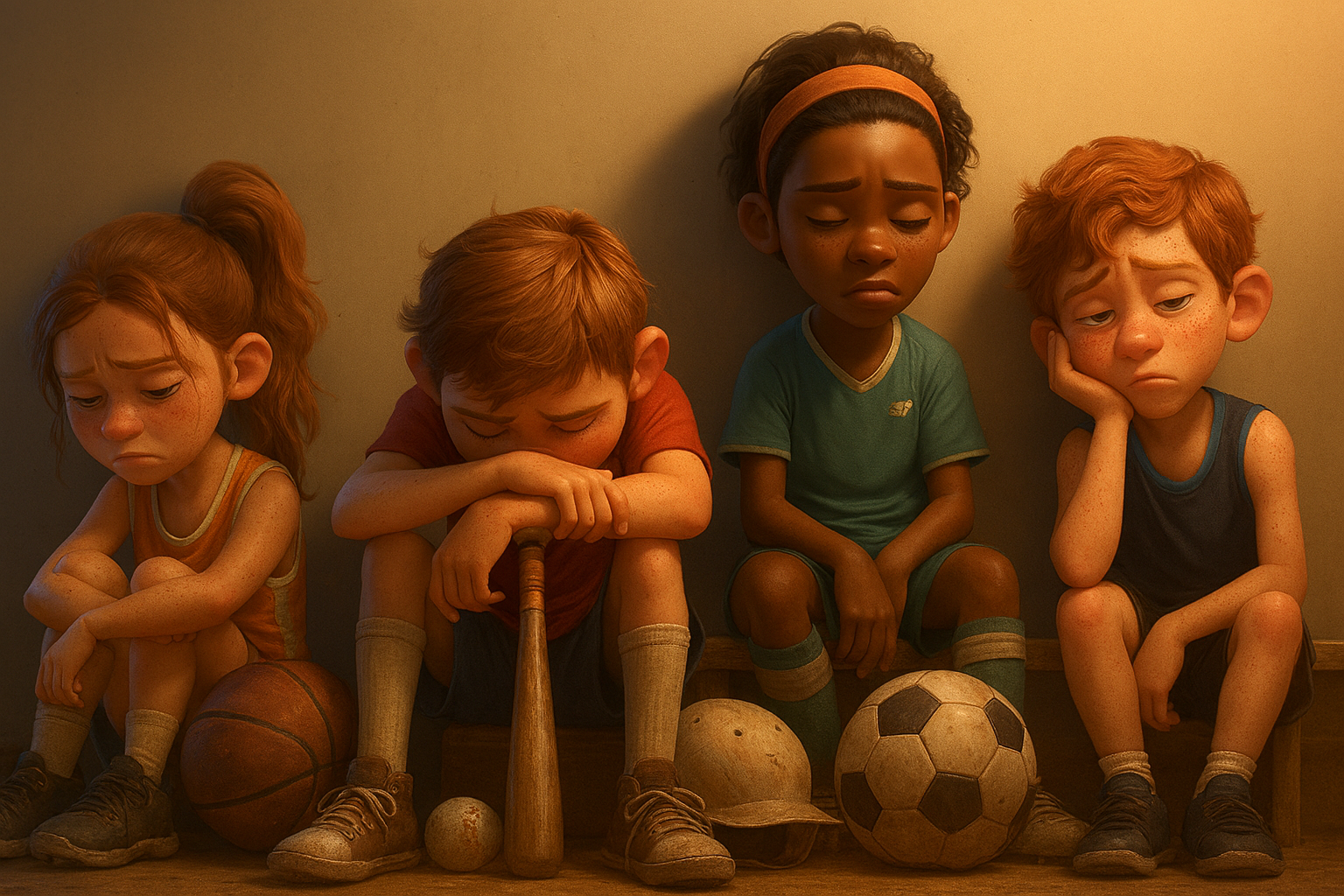
  • Why Kids Quit Sports—and What We Can Do About It

    Why Kids Quit Sports—and What We Can Do About It

    Why Kids Quit Sports—and What We Can Do About It

    By Tim, Founder of FunFirst Athlete

    At FunFirst Athlete, we believe sports should be a source of joy, confidence, and growth—not pressure, burnout, or disappointment. But too often, kids who once loved the game walk away before high school. Why?

    Here are the top 5 reasons kids quit sports—and how we can flip the script.

    1. It’s No Longer Fun

    Ask any kid why they started playing, and you’ll hear words like “fun,” “friends,” and “freedom.” But somewhere along the way, drills replace play, and joy gets benched. When the game stops feeling like a game, kids stop showing up.

    What we can do: Bring back the play. Celebrate effort, creativity, and teamwork—not just wins. Fun isn’t optional. It’s essential.

    2. Burnout from Overtraining

    Early specialization, year-round schedules, and constant pressure to “level up” can wear kids down physically and emotionally. They’re not just tired—they’re tapped out.

    What we can do: Protect rest. Encourage multi-sport play. Let kids be kids, not mini pros.

    3. Pressure to Win and Perform

    When the scoreboard becomes the only measure of success, kids feel the weight of adult expectations. Whether it’s a parent’s disappointment or a coach’s outburst, the message is clear: perform or else.

    What we can do: Shift the focus to growth. Praise effort, resilience, and sportsmanship. Let kids know they’re more than their stats.

    4. Body Image and Social Pressures

    As kids grow, so do insecurities. Locker room comparisons, social media filters, and peer judgment can make sports feel like a spotlight they didn’t ask for.

    What we can do: Create inclusive environments. Celebrate all body types and skill levels. Build teams where every kid feels seen and supported.

    5. Negative Coaching or Team Culture

    A coach’s tone sets the temperature. Yelling, shaming, or favoritism can turn a team toxic. And when kids feel unsafe or unwelcome, they walk away.

    What we can do: Train coaches to lead with empathy. Build team cultures rooted in respect, encouragement, and belonging.

    At FunFirst Athlete, we’re not just talking about the problem—we’re building tools, visuals, and campaigns to help parents, coaches, and kids rediscover the joy of sport. Because when fun leads, everything else follows.

    👉 Learn more at FunFirstAthlete.com

  • AAU Sports: Why Your Child Should Play (But Not For the Reasons You Think)

    AAU Sports: Why Your Child Should Play (But Not For the Reasons You Think)

    The real purpose of AAU isn’t what most parents believe – and missing this could hurt your child’s athletic future

    The AAU Trap That’s Hurting Young Athletes

    Every spring, sports complexes across America fill with parents clutching checkbooks, eager to sign their 10-year-old up for the “elite” AAU team that promises college scholarships and athletic stardom. But here’s the uncomfortable truth: most AAU programs are missing the point entirely, and your child might be better off without them.

    Don’t get me wrong – AAU sports serve a valuable purpose. But it’s probably not the one you think.

    What AAU Actually Does Well (And It’s Not What You Expect)

    AAU excels at one thing: exposure to higher-level competition. When structured correctly, it gives young athletes the chance to face better skilled opponents, experience different playing styles and coaching philosophies, and compete in environments they won’t find in recreational leagues.

    This is valuable. This is worth pursuing.

    But here’s where most parents and coaches get it wrong: AAU should supplement, not replace, recreational sports.

    The “Super Team” Problem That’s Destroying Development

    Walk into any AAU tournament and you’ll see the problem immediately. Baseball teams loaded with the best 8-13 year olds in their region, mercy-ruling opponents 15-2, celebrating blowout victories like they’ve won the World Series. Basketball teams winning by 40 points. Soccer teams that never face a real challenge.

    These “super teams” might stroke egos and fill trophy cases, but they’re creating a generation of athletes who have never learned the most crucial skill in sports: how to struggle and overcome adversity.

    What Happens When Winning Comes Too Easy

    When your child plays on a dominant AAU team, several critical development opportunities disappear:

    • No learning how to lose gracefully – Every athlete will face defeat; better to learn coping strategies early
    • No experience with adversity – The mental toughness that separates good players from great ones is forged in difficult moments
    • No motivation to improve – Why work on weaknesses when you’re already winning every game?
    • No character development – Growth happens when we’re challenged, not when we’re cruising

    Why Recreational Leagues Might Be More Important Than You Think

    Here’s what might shock you: that “lesser” recreational league could be doing more for your child’s long-term athletic development than the elite AAU team.

    Recreational leagues offer something that super teams can’t: appropriate struggle.

    In rec leagues, your child faces:

    • Games that come down to the final innings, possessions, or minutes
    • Teammates with varying skill levels (teaching leadership and patience)
    • Coaches who focus on development over winning
    • Pressure situations where every player matters
    • The experience of both victory and defeat

    The Development Curve That Changes Everything

    Parents obsessing over 10-year-old athletic rankings are missing a crucial fact: athletic development peaks during the teenage years.

    That baseball player hitting home runs at age 11? They might plateau by 15 when pitching velocity increases and the field gets bigger. The kid struggling in 6th grade soccer? They could be getting recruited by Division I colleges as a senior once their growth spurt hits and their technical skills mature.

    Physical development, emotional maturity, and sport-specific IQ all evolve at different rates. The athletes who learn to compete, struggle, and persevere – regardless of their current skill level – are the ones who succeed long-term.

    How to Choose the Right AAU Experience

    If you decide AAU is right for your child, ask these questions:

    About the Coach

    • Do they teach during timeouts or just yell about winning?
    • How do they handle player mistakes – with instruction or frustration?
    • Do they know each player’s personality and learning style?
    • What’s their philosophy on playing time and development?

    About the Team Structure

    • Is this a “super team” or a developmental roster?
    • Will your child face appropriate challenges?
    • Are games competitive or mostly blowouts?
    • Do they emphasize skill development or just winning?

    About the Program’s Values

    • Is the focus on long-term player development?
    • Do they understand that losing games can accelerate learning?
    • Are they building complete athletes or just collecting trophies?

    The Balanced Approach That Actually Works

    The most successful youth sports development combines:

    1. Recreational leagues for fundamental skill development, appropriate competition, and learning to handle various game situations
    2. Select AAU opportunities against higher-level competition to test skills and expose weaknesses
    3. Individual skill work to address specific areas needing improvement
    4. Mental development through experiencing both success and failure

    Sport-Specific Considerations

    Baseball

    • Rec leagues often provide more at-bats and innings pitched
    • AAU travel ball can expose players to different pitching styles
    • But beware of teams that just stack talent without developing fundamentals

    Basketball

    • AAU offers exposure to different defensive schemes
    • Rec leagues provide more teaching moments during slower-paced games
    • Watch for programs that actually develop basketball IQ, not just athleticism

    Soccer

    • Club soccer benefits from consistent coaching and system development
    • Rec leagues teach adaptability and problem-solving with varied teammates
    • Elite teams should still face regular challenges, not just dominate

    Other Sports

    The same principles apply: seek appropriate competition, prioritize development over trophies, and ensure your child is being challenged to grow.

    Red Flags: When AAU Might Be Hurting Your Child

    Watch for these warning signs:

    • Your child stops enjoying their sport
    • They become afraid to make mistakes
    • They expect to win every game easily
    • They’re not being challenged or pushed to improve
    • The coach prioritizes winning over teaching
    • Other players are significantly less skilled, providing no growth opportunities
    • The focus is entirely on current performance rather than long-term development

    The Bottom Line: Purpose Over Prestige

    AAU sports aren’t inherently good or bad – they’re tools. Like any tool, their value depends entirely on how they’re used.

    The best AAU programs understand their true purpose: developing complete athletes who can handle adversity, compete at higher levels, and continue growing throughout their careers.

    Programs focused solely on winning games with 12-year-olds are missing the point entirely.

    Making the Right Choice for Your Young Athlete

    Before writing that AAU check, ask yourself:

    • What is my child actually learning from this experience?
    • Are they being appropriately challenged?
    • Will this help them 5 years from now, not just next weekend?
    • Am I choosing based on my ego or their development?

    Remember: the goal isn’t to create a dominant 10-year-old. It’s to develop a resilient, skilled athlete who loves their sport and has the tools to succeed at whatever level their talent and dedication can take them.

    That happens through appropriate struggle, quality coaching, and experiences that challenge them to grow – not through collecting trophies against overmatched opponents.

    Choose wisely. Your child’s athletic future depends on it!

  • 5 Must Have Basketball Training Tools Every Young Athlete Needs This Season

    5 Must Have Basketball Training Tools Every Young Athlete Needs This Season

  • Why Youth Sports Should Be About More Than Just Winning

    As a dad and youth league leader, I’ve seen firsthand how sports can shape a child’s future—not just in athletics, but in life. Whether it’s baseball or another sport, youth athletes deserve more than just a scoreboard. They deserve a foundation built on confidence, character, and the kind of resilience that lasts long after the season ends.

    When we talk about youth sports training, skill development for kids, and long-term athletic development, we’re not just referring to drills or workouts. We’re talking about teaching kids how to lose with grace, how to struggle with purpose, and how to grow through it all. These are life skills—tools they’ll carry into adulthood, whether they stay in sports or not.

    That’s why I focus on age-appropriate training methods and fundamental sports skills that make the process engaging, not overwhelming. When kids workouts are fun and game play is exciting, young athletes naturally improve. Baseball is a perfect example: every swing, every catch, every inning is a chance to learn—not just perform.

    We use youth sports equipment and training tools designed to support real development, not just short-term wins. Because a “win at all costs” mindset doesn’t build better athletes—it builds burnout. Instead, we lean into youth sports resources that prioritize effort, consistency, and joy. When sports are enjoyable for kids, they show up with energy and leave with pride.

    The field itself should be a place of growth. When we make space for fun, we make space for learning. And when we focus on the long game—on building skills, confidence, and emotional strength—we help kids become not just better athletes, but better people!